
Healthcare communication is no longer limited to printed materials or referral-based outreach. As more patients rely on digital access and information to guide healthcare decisions, marketing strategies must respond with structured, compliant methods. This article explains how modern tools and artificial intelligence, such as chatbots and predictive analytics, support more accurate targeting, improved efficiency, and measurable patient engagement.
What Is Healthcare Marketing?
Healthcare marketing connects patients with appropriate services through structured, medically accurate communication, promotes service lines and operational efficiency, and guides patients across the care continuum. It aligns clinical goals with institutional visibility to meet public health needs and remain competitive.
Modern Versus Traditional Healthcare Marketing
Modern healthcare marketing focuses on data-driven, patient-centered strategies that foster trust and make providers feel appreciated for prioritizing ethical, compliant approaches.
|
Aspect |
Modern Healthcare Marketing |
Traditional Healthcare Marketing |
|
Approach |
Patient-centered, data-informed, and outcome-oriented |
Provider-centered, reputation-based, and often promotional |
|
Channels Used |
Digital platforms, personalized content, and omnichannel campaigns |
Print ads, brochures, physician referrals, and word of mouth |
|
Message Tone |
Educational, neutral, clinically accurate |
Generalized, promotional, and often emotionally persuasive |
|
Compliance Involvement |
Reviewed by legal, clinical, and compliance teams before release |
Often informal or unregulated, with minimal oversight |
|
Targeting Method |
Based on demographic data, health behavior, and clinical need |
Broad targeting based on location or existing referral networks |
These differences underscore the need for structured, ethically sound marketing strategies that align with clinical standards and patient expectations in modern healthcare settings.
Benefits of Healthcare Marketing
A structured marketing strategy allows healthcare providers to reach, inform, and retain patients effectively. Beyond patient acquisition, it promotes health literacy, reduces misinformation, and strengthens institutional credibility. These outcomes support long-term growth and improve public trust in medical services.
Improves Patient Acquisition and Retention
Healthcare marketing increases visibility among individuals actively searching for medical services, allowing providers to connect with patients at the right time. Clear messaging, accessible information, and consistent communication support patient trust and follow-through. Long-term retention is improved through ongoing engagement and education across multiple touchpoints.
Strengthens Public Trust in Providers
Patients are more likely to trust healthcare institutions that communicate transparently and maintain a visible, credible online presence. Marketing allows providers to share clinical qualifications, safety protocols, and patient outcomes in a structured, informative format. This transparency fosters trust before the first point of contact and reinforces institutional legitimacy.
Enhances Health Literacy Across Populations
Educational campaigns help clarify complex medical topics, procedures, and preventive care strategies for diverse patient populations. Content tailored to the appropriate literacy level supports better decision-making and adherence to treatment plans, thereby improving health outcomes and reducing communication-related gaps in care.
Supports Organizational Growth and Service Expansion
Effective marketing allows clinics and health systems to promote new services, specialties, and care models to targeted populations. Campaign data can guide service line investments and identify unmet community needs. As demand increases, providers can scale operations strategically based on patient insights.
Facilitates Better Patient-Provider Communication
Marketing tools such as AI-powered personalized communication empower clinical leaders to deliver relevant, timely information that supports patient care.
Core Components of a Strong Healthcare Marketing Plan
A structured healthcare marketing plan must include review by legal, clinical, and compliance teams to ensure regulatory compliance and to ensure medically accurate information across platforms. This process supports clarity, coordination, and accessibility of services.
Brand Positioning and Messaging
Healthcare providers must define a brand identity based on clinical expertise, service scope, and institutional credibility. Messaging must remain consistent, accurate, and aligned with licensure, board certifications, and approved treatment capabilities. All claims should be verifiable and presented without exaggeration or promotional tone.
Omnichannel Strategy
Effective outreach requires coordinated channels, including websites, search engines, print materials, and referral networks. Each platform must serve a defined function based on patient access patterns and information needs. Consistency in language, tone, and visual presentation is necessary to maintain message alignment across channels.
Content Marketing for Education and Trust
Content must address common questions, explain procedures, and clarify expectations using clinically accurate language. Acceptable formats include articles, videos, and graphics that clinical and compliance teams have reviewed before publication. All materials must reflect current medical standards and use neutral, factual phrasing.
Local SEO and Reputation Management
Visibility within geographic search results allows providers to connect with nearby patients seeking care. Structured business profiles, accurate service listings, and consistent patient reviews increase search relevance and trust. Reputation management also includes monitoring third-party sites and responding to feedback in accordance with approved protocols.
How to Create an Effective Healthcare Marketing Strategy
A healthcare marketing strategy must follow a structured process that aligns with clinical priorities, regulatory obligations, and measurable goals. Each step addresses a functional requirement, from institutional assessment to patient outreach and performance tracking. The strategy must be developed in collaboration with legal, clinical, and administrative teams to ensure accuracy and compliance.
Step 1: Conduct a Comprehensive Internal Assessment

Planning begins with a comprehensive review of current marketing activities, clinical services, and institutional goals. This includes auditing website performance, patient feedback, referral sources, and outreach materials. Internal data must guide messaging, channel selection, and service line priorities.
Step 2: Define Target Audiences by Service Line

Target populations must be identified based on demographics, geographic location, insurance type, and clinical need. Each service line may require a distinct communication plan that reflects patient behavior and access patterns. Messaging must be specific, compliant, and relevant to each audience group.
Step 3: Select Channels Based on Patient Access Points
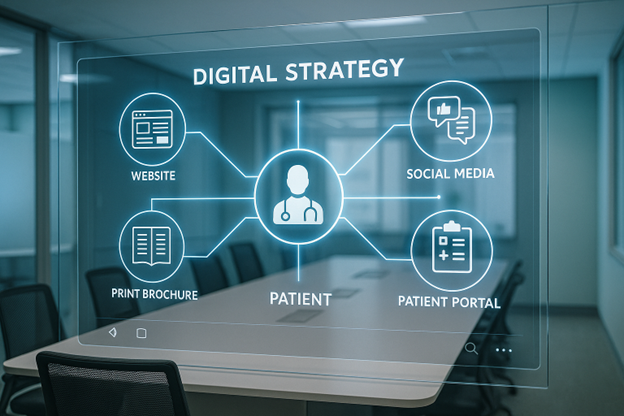
Digital platforms, provider directories, community partnerships, and printed materials should be selected based on how patients typically find and access care. Each channel must be reviewed for reach, cost, and compatibility with HIPAA-compliant tools. Integration between channels supports message consistency and operational efficiency.
Step 4: Develop Content That Meets Clinical and Legal Standards
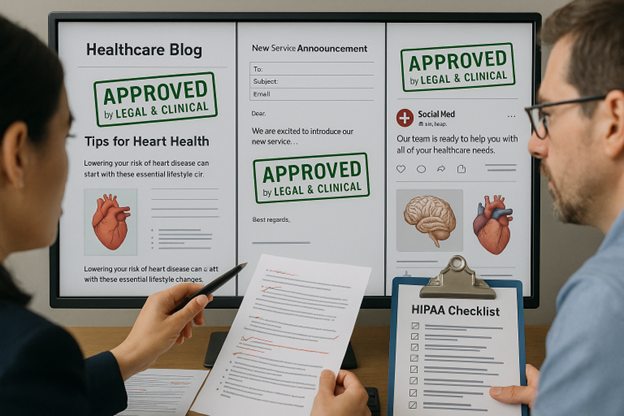
All written and visual materials must undergo clinical and legal review before publication. Content should reflect current medical guidelines and avoid language that could be interpreted as diagnostic or outcome-promising. Materials must also meet health literacy standards and include appropriate disclaimers where needed.
Step 5: Implement Tracking, Review, and Performance Metrics

Marketing initiatives must include systems to monitor traffic, engagement, conversions, and patient feedback. Internal teams should review data regularly to adjust campaign direction, address concerns, and identify service gaps. Outcomes must be documented for institutional goals, including patient volume, satisfaction, and referral growth.
How AI Is Changing Healthcare Marketing
Artificial intelligence now supports a range of healthcare marketing functions, from campaign planning to direct patient interaction. These systems increase efficiency, reduce administrative workload, and improve targeting while maintaining clinical oversight and regulatory compliance. The tools must be applied with defined parameters to prevent data misuse and support institutional goals.
Smarter Patient Targeting
AI tools can analyze clinical, demographic, and behavioral data to identify patient groups for specific services. These insights help refine outreach based on geography, insurance eligibility, health history, and search behavior. Targeting becomes more specific, reducing resource waste and improving the relevance of communication.
Enhanced Patient Interaction
AI-driven tools such as chat assistants, appointment bots, and virtual response systems offer structured guidance without replacing human care. These platforms follow pre-approved scripts and maintain HIPAA compliance through secure processing and limited-access protocols. Their role is to improve access to information and streamline intake workflows.
Campaign Optimization and Reporting
AI platforms can monitor performance across websites, email systems, social media, and search engines in real-time. The system provides immediate insights into user behavior, conversion rates, and response timing, allowing teams to refine campaigns based on actual outcomes. This level of analysis enables consistent improvements without relying solely on manual reporting.
Content Personalization at Scale
AI systems can support large-scale content delivery by adapting language, imagery, or messaging based on patient demographics or clinical needs. These modifications are generated using predefined templates and rules to maintain consistency with brand standards and legal requirements. The result is improved engagement without increasing the risk of inaccurate or inappropriate messaging.
Predictive Insights for Service Demand
AI can identify trends in patient behavior or inquiries that may indicate rising interest in specific services or conditions. This data allows healthcare systems to prepare resources, adjust campaign timing, or modify messaging before demand increases. These insights must be reviewed with clinical and operational teams to avoid overextension or misinformation.
Ethical Considerations and Compliance
Marketing in healthcare requires strict adherence to ethical standards, privacy laws, and clinical oversight. Using digital tools, including artificial intelligence, introduces additional risks related to patient data, content accuracy, and automation. All strategies must be reviewed to confirm alignment with institutional policies and federal regulations.
Protection of Patient Data
All marketing platforms must comply with HIPAA regulations and institutional privacy protocols to prevent unauthorized access or data misuse. Systems that collect or process identifiable health information must implement encryption, access controls, and audit controls. Any third-party vendor must meet these standards under a formal business associate agreement.
Accuracy of Claims and Messaging
All published content must reflect medically verified information and avoid language that could be misinterpreted as a clinical diagnosis or treatment guarantee. Marketing materials should be reviewed by clinical, legal, and compliance teams before distribution. Statements about services must align with licensure, scope of practice, and documented clinical outcomes.
Transparency in AI-Generated Communication
AI-generated messages, responses, or content must be disclosed to patients when appropriate and monitored for accuracy. These systems should adhere to pre-approved language models and avoid making autonomous clinical decisions or unsupported recommendations. Institutions must retain control over final content and maintain clear review protocols.
Oversight of Automated Tools
Automated systems, such as chatbots, schedulers, and email sequences, must be configured to operate within defined clinical and ethical boundaries. These tools should not offer clinical advice, interpret symptoms, or direct patients without input from licensed personnel. Regular review is necessary to confirm that system behavior remains within scope.
Institutional Responsibility and Review
Healthcare organizations are accountable for all messaging, regardless of platform or automation level. All campaigns must have formal review processes and documentation of approvals and revisions. Compliance officers, legal counsel, and clinical leadership must collaborate to identify and address ethical risks.
Final Thoughts
Healthcare marketing is shifting toward integrated models that support institutional credibility, patient access, and long-term engagement. Strategic use of artificial intelligence must remain within ethical and regulatory boundaries, with clinical teams guiding system design and oversight. Success depends on maintaining a balance between innovation, compliance, and the specific needs of each service population.
Networld Online offers healthcare marketing services designed to support compliant, AI-enabled systems that align with clinical standards and adapt to the specific needs of each service population.
Resources
Healthcare Marketing FAQ. WebMD Ignite. (n.d.). https://webmdignite.com/faq/what-is-healthcare-marketing
Kelly, J. I. (2024, March 29). How to Create a Healthcare Marketing Strategy: A Step-by-Step Guide. Invoca. https://www.invoca.com/blog/healthcare-marketing-step-by-step
Panel®, E. (2025, March 17). Exceeding Expectations: How To Leverage AI In Healthcare Marketing. Forbes. https://www.forbes.com/councils/forbesagencycouncil/2025/03/17/exceeding-expectations-how-to-leverage-ai-in-healthcare-marketing/
